The FARI Brussels Conference returns on 23 and 24 November, find out more!
An Initiative of
Supported by

European AI Challenge 2026 – From Data to Policy
Author
Laura Jousset
From Data to Policy: 60 Students Explore How AI Can Improve Europe’s Flood Preparedness
Can artificial intelligence help Europe better prepare for future floods? On 29 and 30 October 2026, 60 students gathered in Brussels for the European AI Challenge 2026 – From Data to Policy, jointly organised by FARI – AI for the Common Good Institute and the European Commission’s Joint Research Centre (JRC). Selected from nearly 240 applications, participants from diverse academic backgrounds had two days to transform real-world flood data into practical tools and policy recommendations to help public authorities better anticipate and respond to climate-related emergencies.
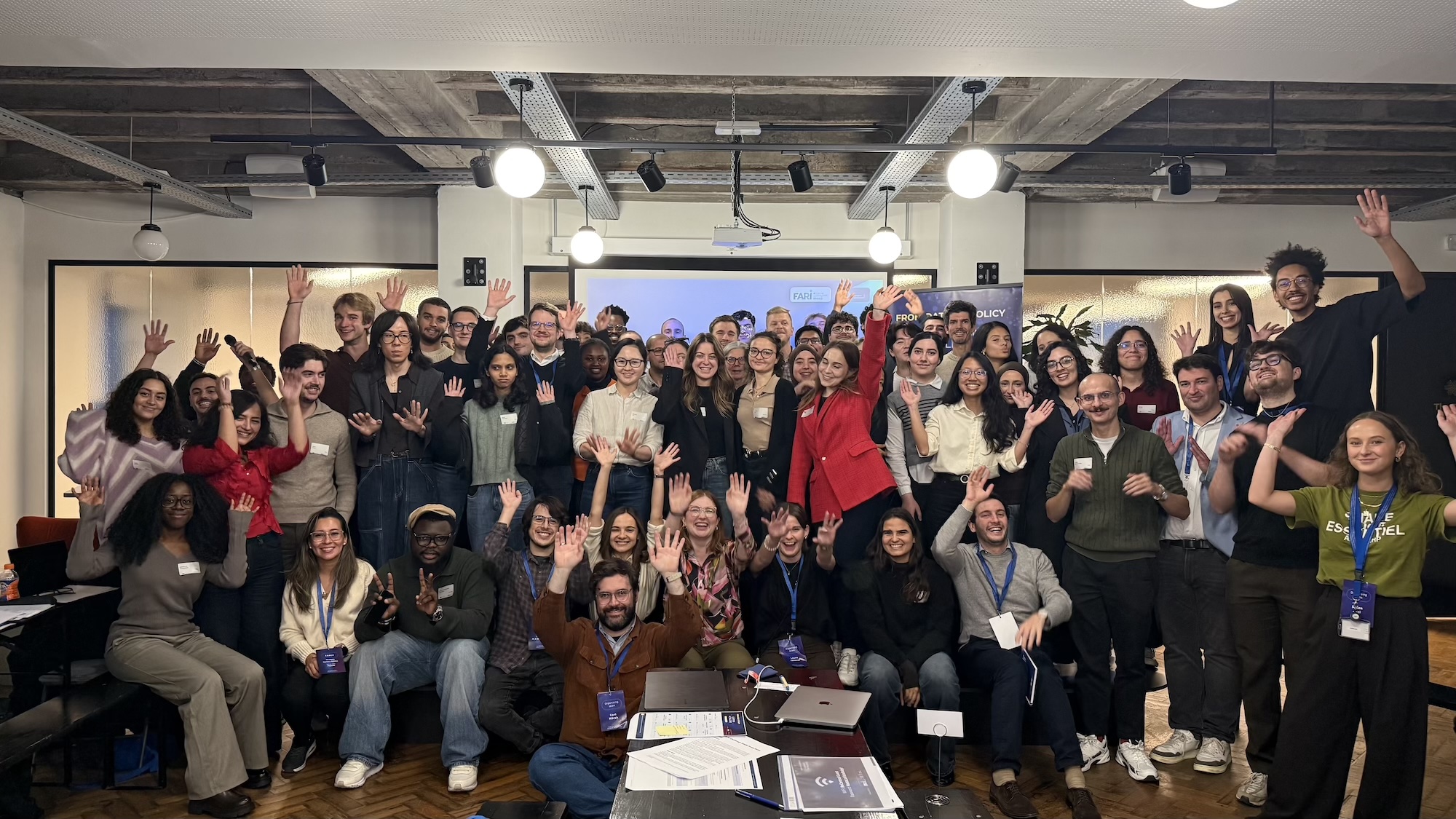
Bringing different disciplines together to address a shared challenge
Inspired by the devastating floods of July 2021 in Belgium, Germany and the Netherlands, the European AI Challenge invited students to explore a pressing question: if similar floods happened tomorrow, would we be better prepared?
The event attracted nearly 240 applications, reflecting strong interest in using AI and data to address societal challenges.
Among those selected, participants represented a broad range of educational institutions, including Université libre de Bruxelles (ULB), Vrije Universiteit Brussel (VUB), KU Leuven, University of Antwerp, Erasmushogeschool Brussel, UCLouvain and BeCode, among others.
Their academic backgrounds were equally diverse, ranging from artificial intelligence, data science, computer science and engineering to political science, international relations, communication and environmental studies.
This diversity was central to the challenge. Indeed, developing effective solutions to complex public issues requires more than technical expertise: it also calls for an understanding of policy, communication and the people affected by decisions.
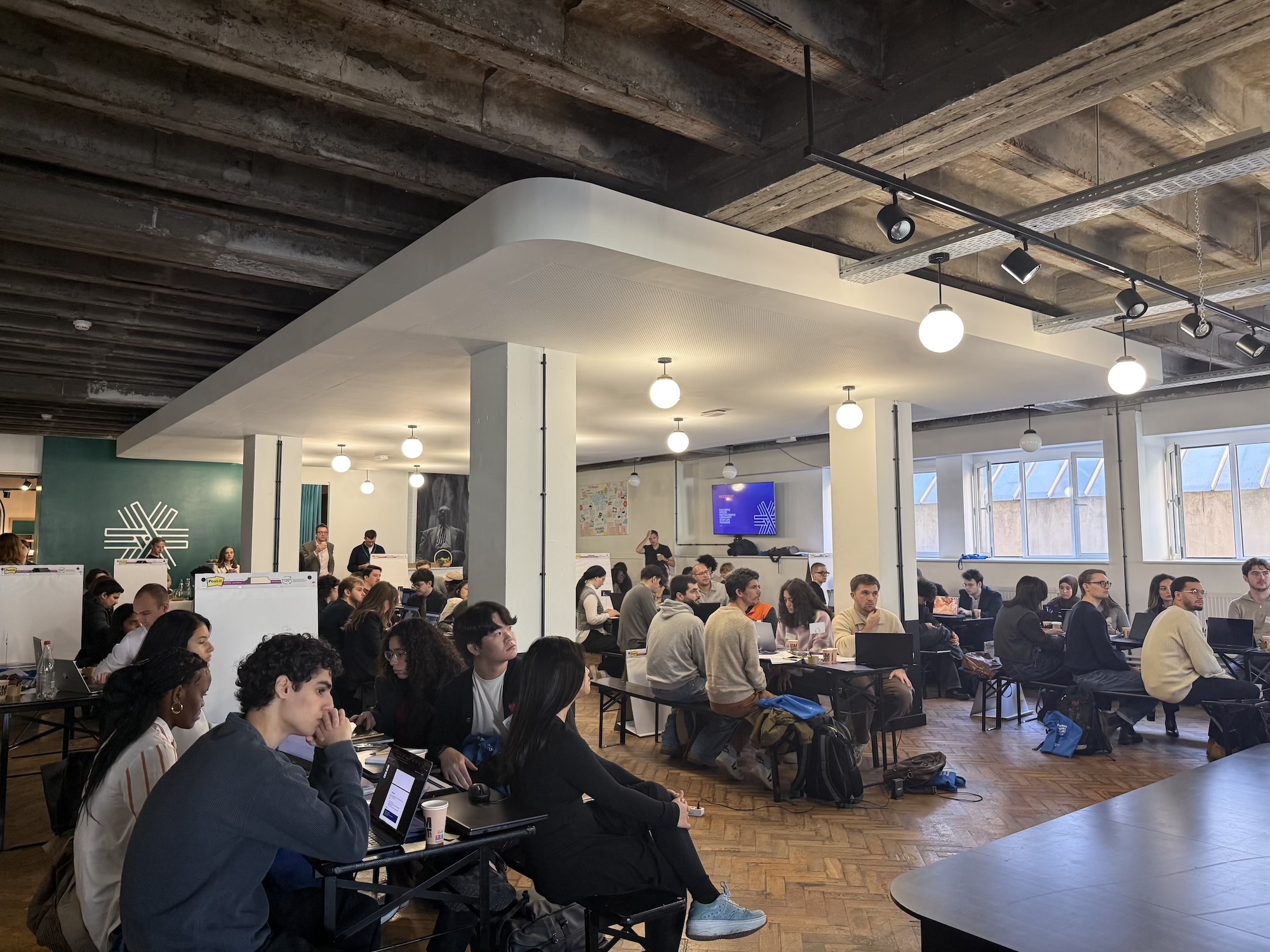
From complex datasets to practical solutions
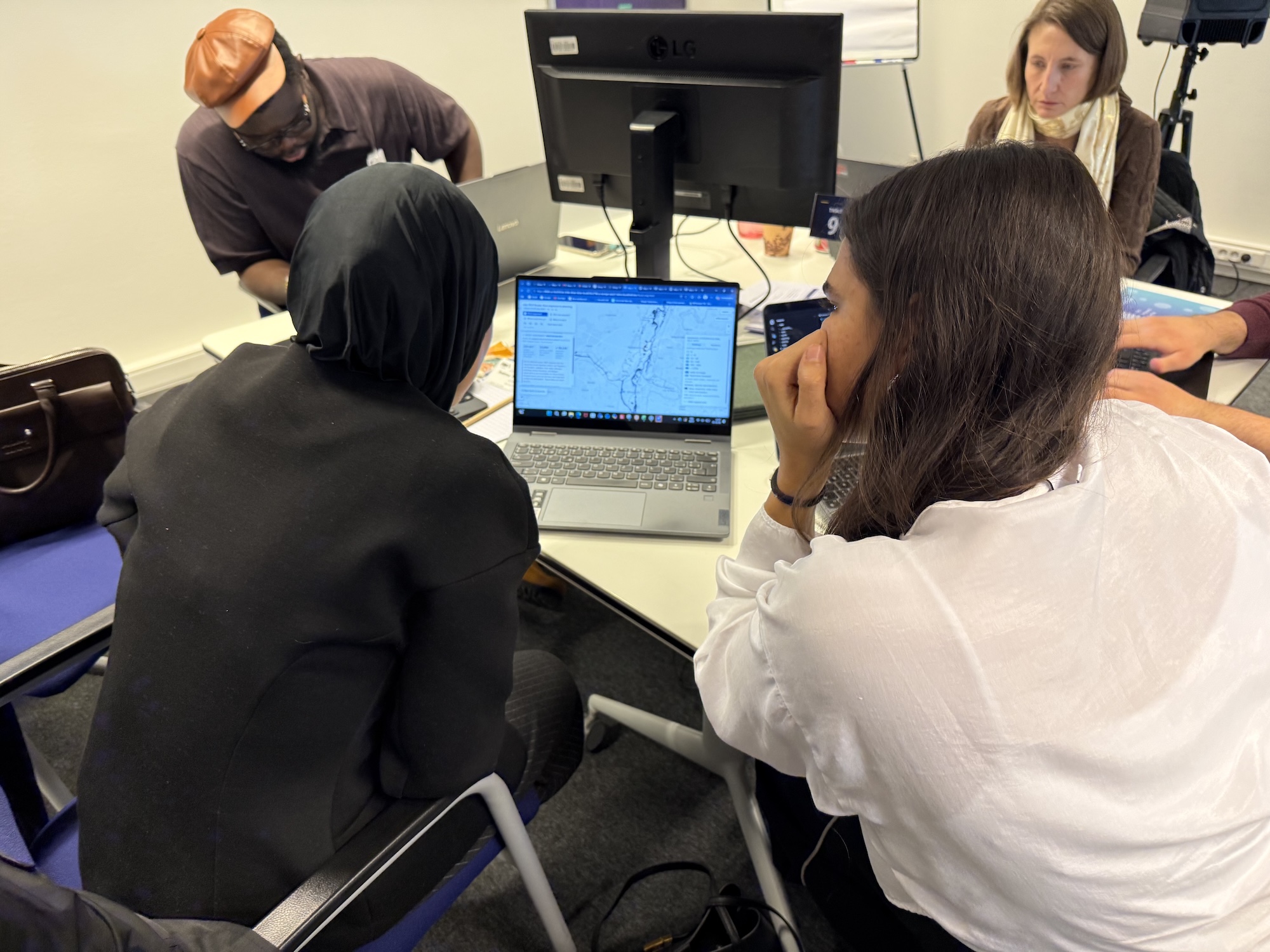
Over two intensive days, multidisciplinary teams worked with European Commission geospatial datasets, including Copernicus data, to investigate flood risks across Belgium, Germany and the Netherlands.
To address this challenge, students had to identify vulnerable populations and infrastructure, analyse potential flood scenarios, and translate their findings into actionable recommendations for public authorities.
With the support of coaches and experts, the teams developed a range of innovative prototypes and approaches:
- Interactive flood-risk maps to visualise exposed neighbourhoods, buildings and critical infrastructure.
- Evacuation planning tools to identify safer routes, locate shelters and prioritise the most vulnerable populations.
- Decision-support dashboards to help local authorities understand risks and allocate resources.
- Communication and early-warning solutions to deliver clearer, more accessible information to residents, including those less likely to use digital services.
Beyond the technical developments, several teams also explored how to make complex information accessible to non-technical decision-makers. Their objective was to ensure that scientific evidence could support timely and informed action.
Finally, on the second day, the teams presented their solutions and policy recommendations to a jury of experts at the JRC in Brussels.
Spotlight on the winning team: using AI to anticipate evacuations
Congratulations to Team 3, winners of the European AI Challenge 2026!
Their project focused on one of the most critical aspects of flood management: preventive evacuation and early action to save lives.
To tackle this issue, the team developed a flood simulation tool designed to help authorities anticipate affected areas, identify alternative routes to safety and organise evacuations more effectively.
In particular, their approach proposed a phased evacuation strategy, prioritising populations in the highest-risk areas before progressively extending interventions to other zones. By doing so, the team aimed to encourage earlier action while reducing pressure on emergency services.
In recognition of their achievement, the winning team was awarded a trip to the JRC’s research site in Ispra, Italy, and an internship opportunity at FARI, offering them the chance to further explore the intersection of research, technology and real-world impact.
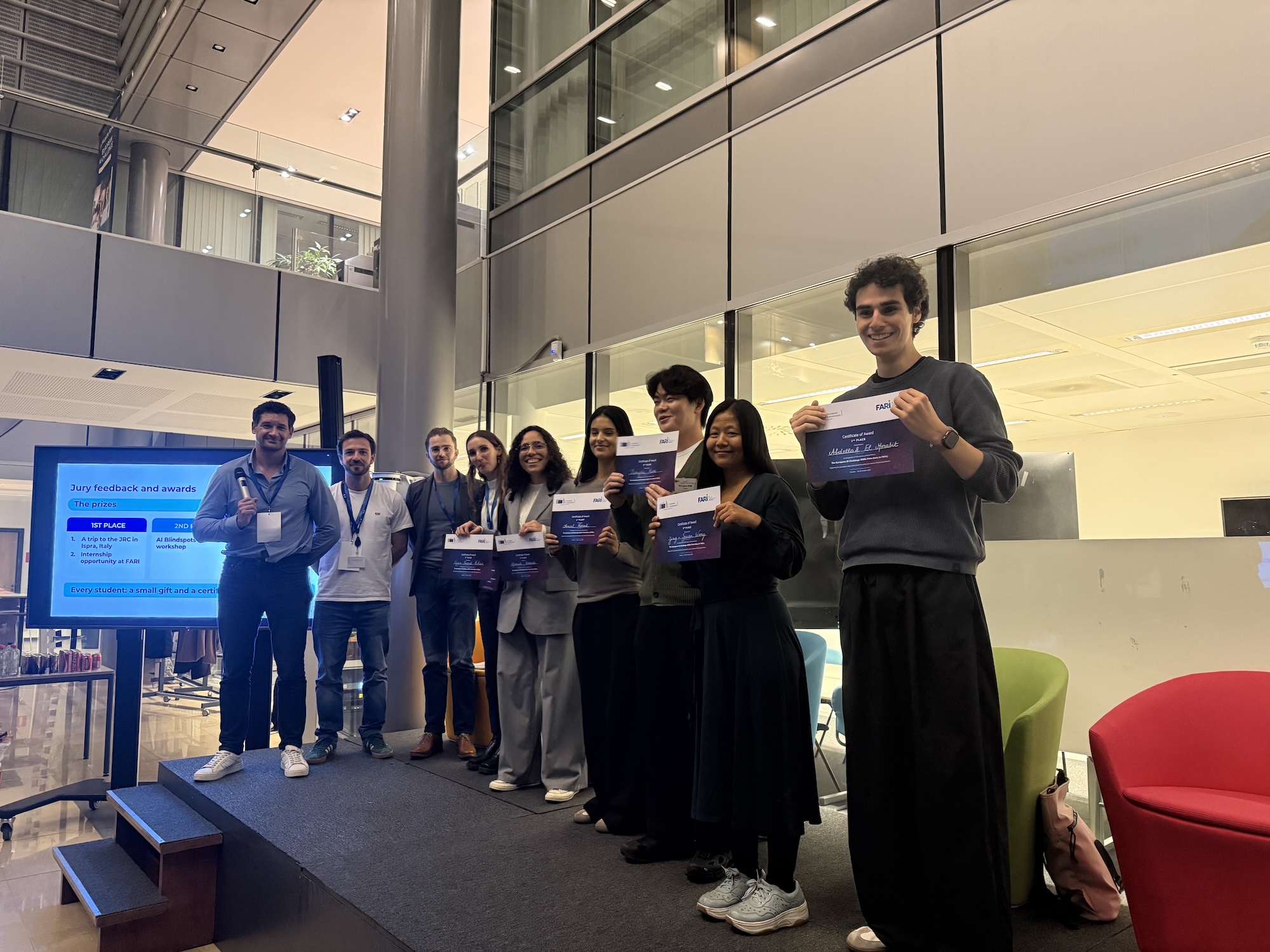
Meanwhile, the runners-up were also recognised for their contributions:
- Second place: An AI Blindspot workshop at FARI, offering an opportunity to further develop critical thinking around artificial intelligence.
- Third place: Tickets to an exhibition at BOZAR, Brussels’ Centre for Fine Arts.
Together, these projects illustrated the potential of combining technical innovation with practical policy considerations.
A key lesson: AI is powerful, but human expertise remains essential
Throughout the challenge, students experienced both the opportunities and limitations of AI.
On the one hand, AI tools helped accelerate coding, data analysis and prototype development, allowing teams to achieve impressive results in just two days. On the other hand, participants also encountered incorrect outputs, incomplete datasets and inconsistencies requiring additional verification.
These experiences reinforced an essential message: AI-generated results can appear convincing without necessarily being accurate. Therefore, reliable data, critical thinking and human oversight remain indispensable, particularly when decisions could affect people’s safety.
Furthermore, the challenge highlighted the importance of collaboration. In crisis situations, the ability to work across disciplines, communicate clearly and coordinate actions can be just as important as the technology itself.
Ultimately, the European AI Challenge was not only about developing new tools. Above all, it was about learning how to use AI responsibly, understanding its limitations and ensuring that technological progress serves real societal needs.
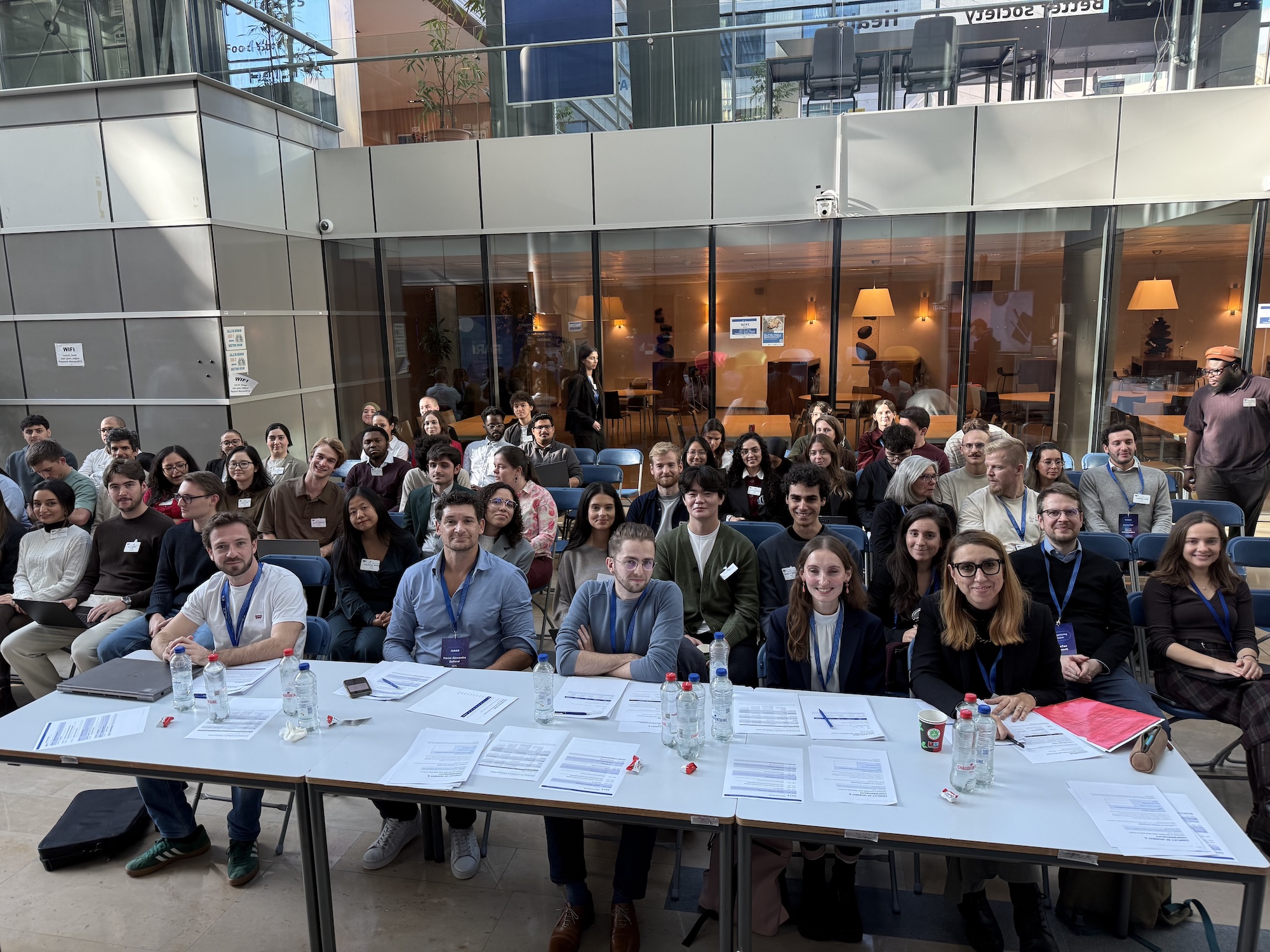
Thank you to everyone who made it possible!
FARI and the European Commission’s Joint Research Centre warmly thank all participating students for their creativity, commitment and enthusiasm throughout these two days.
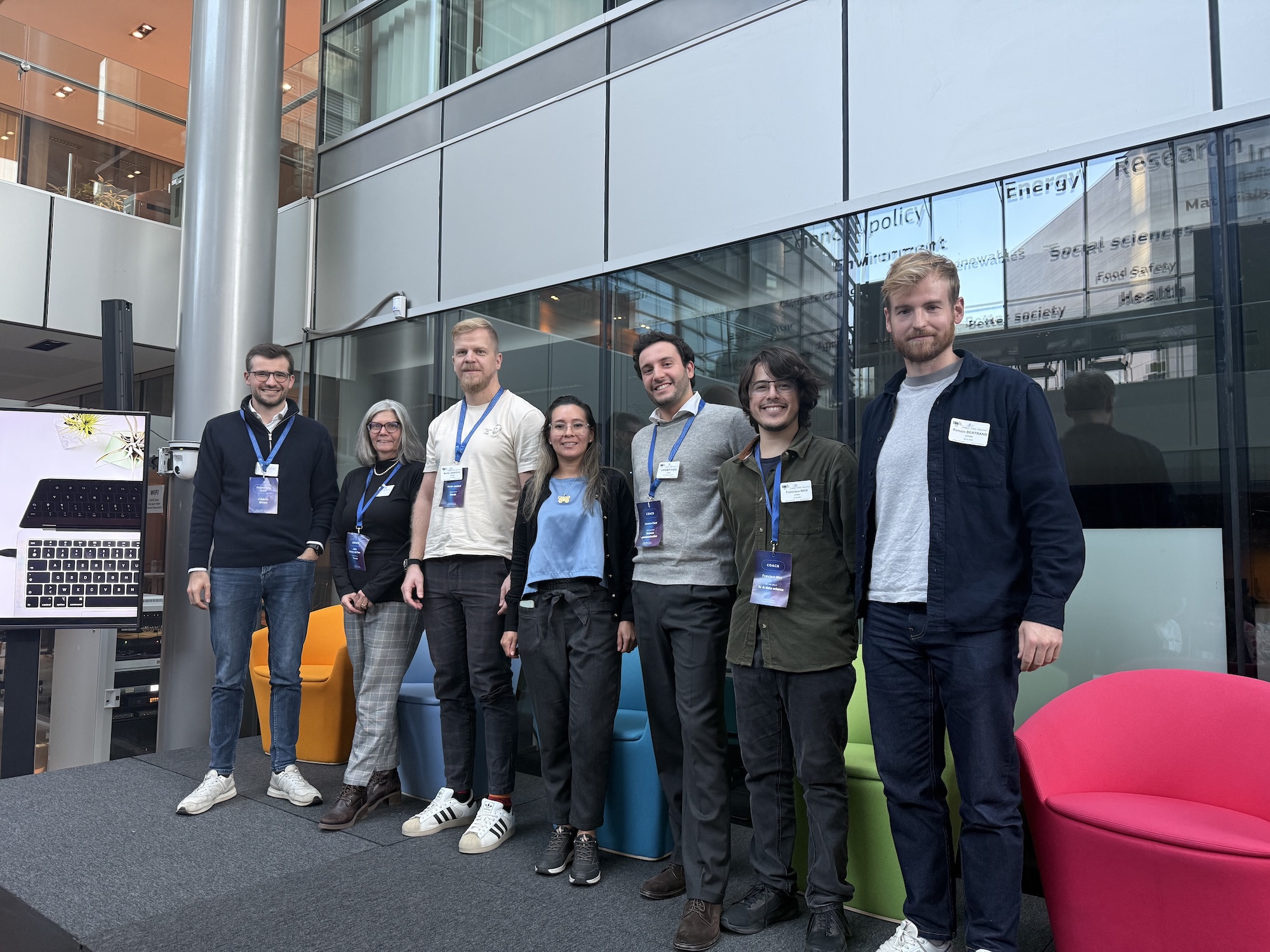
Our gratitude also goes to the coaches, experts, jury members and organising teams whose expertise and dedication made this initiative possible.
The European AI Challenge 2026 demonstrated what becomes possible when young talents, scientific expertise and public-policy perspectives come together around a shared objective: using AI and data for the common good.
Share
Other news


