The FARI Brussels Conference returns on 23 and 24 November, find out more!
An Initiative of
Supported by

Exploring in-betweenness in AI systems: what happens when identity does not fit?
Author
Léa Rogliano-Aubry
In 2025, FARI – AI for the Common Good Institute, launched a format called « Anchoring sessions» to support affiliated FARI researchers who wish to add a citizen engagement component in their research. A first session shaped as a focus group was organised with Anastasia Karagianni from LSTS research group (VUB) about auditing smart wearables (e.g. connected & portable rings, glasses) based on equity and safety by design. For this second edition, we had the pleasure to host Dr. Miriam Doh and her colleagues (Dr. Piera Riccio (University of Amsterdam), Dr. Monique Munarini (Trinity College Dublin) and Olivia Lopez Calderon (Skin Mutts)) for a workshop examining how artificial intelligence systems operationalize identity through rigid categorical frameworks, and the consequences this has for people whose identities are fluid, hybrid, or context-dependent.
Our guest, Miriam Doh, is a postdoctoral researcher at the Université Libre de Bruxelles, affiliated with the Machine Learning Group. Her research investigates the socio-technical implications of AI systems, with a focus on fairness, identity, and algorithmic accountability in computer vision.
In this article, Léa Rogliano, Head of FARI’s Citizen Engagement Hub (CEH), speaks with Miriam about her “Anchoring Sessions” session. What are we looking for when we open up our research to third parties? What can we expect from such collaborations? What are the best methods for achieving a satisfactory result?
The CEH’s mission is to stimulate exchanges between researchers and civil society and build a concerted innovation for the common good.
L.R: Hello Miriam, let’s begin with a general question. What does AI for the common good mean to you as a researcher?
For me, AI for the common good is not simply about building more accurate systems, but about ensuring that AI genuinely benefits the people and communities it affects. This also means rethinking how we define success in AI. Too often, research focuses on optimization and accuracy without asking a crucial question: accurate for whom? A system can be technically successful and still cause harm if the categories it relies on are flawed, or if it is used for surveillance rather than support. AI for the common good therefore requires continuous reflection on whose interests are being served, as well as meaningful participation from those most affected by these technologies.
Could you tell us more about the topic of your research and what motivated this project?
This project started from a very specific discomfort. In my research on facial recognition and algorithmic fairness, I kept encountering a problem that was being discussed in critical AI communities but rarely addressed in technical machine learning venues. The racial categories used in machine learning datasets are almost entirely derived from US census classifications, and they have very little relevance in a European context. More fundamentally, they fail completely when it comes to people who are mixed-race and whose identity does not fit neatly into any single box.
Together with Dr. Piera Riccio, we wrote a position paper arguing that racial categorization in machine learning is not just technically imprecise but conceptually flawed. Race is a social construct, not a biological fact, and treating it as a stable, measurable variable does more harm than good.
But as we worked on that paper, we kept noticing the same problem elsewhere. It was not just about race. Gender, disability, language, migration status, and family structure are all areas where AI systems tend to make the same mistake, assuming that identity is fixed, singular, and classifiable. And the people who pay the price are always those whose lives do not fit the default.
That is what motivated us to expand the conversation, first to the research community at the ACM Conference on Human Factors in Computing Systems (ACM CHI) in Barcelona, and then to civil society organizations here at FARI. From the beginning, we also wanted to make sure that the outputs of this work reached audiences beyond academia, which is why we partnered with Skin Mutts from the start.
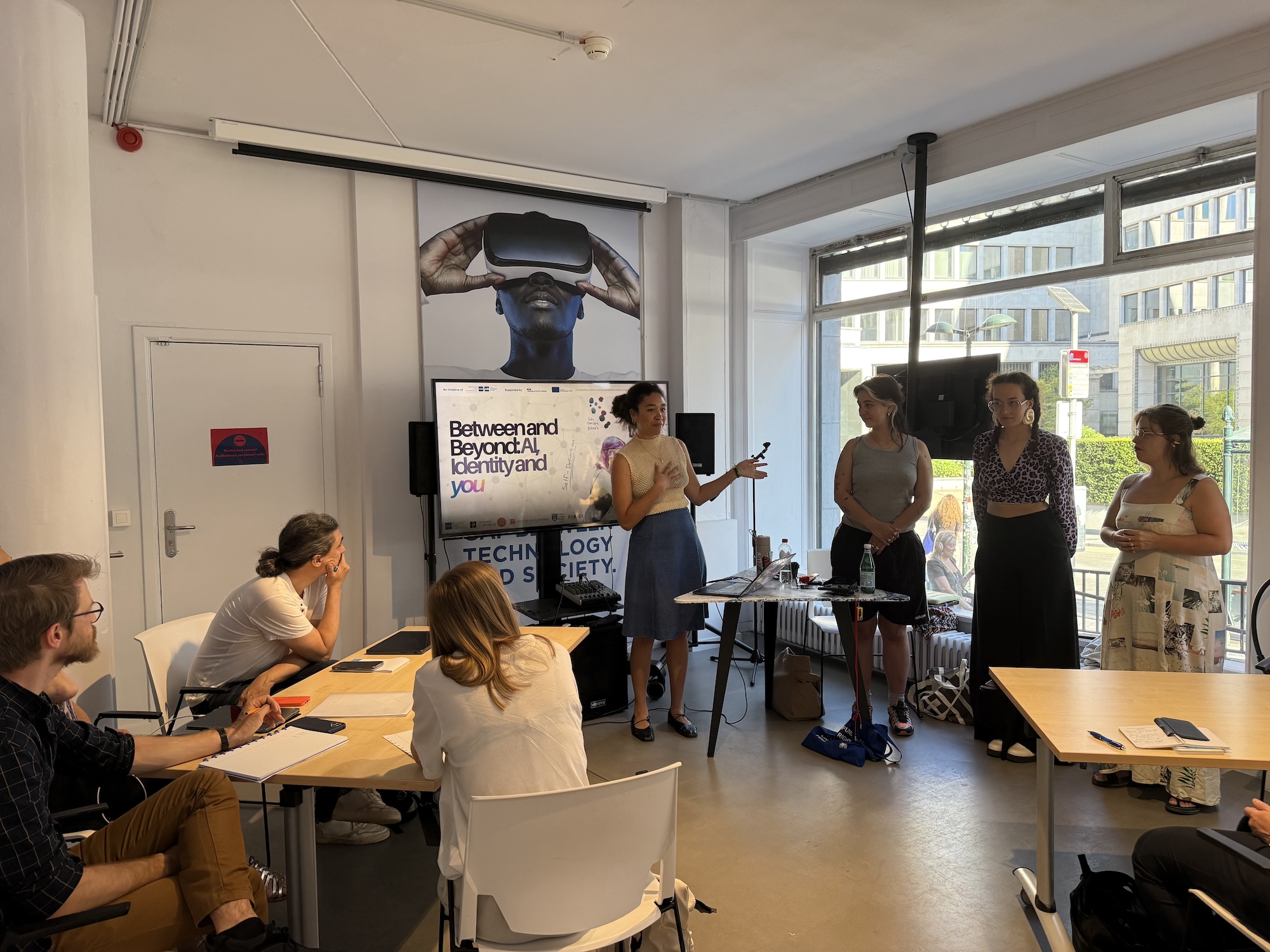
L.R: We were delighted to welcome you and your three colleagues involved in this research. Could you tell us more about this group and what led you to work together on this topic?
The group came together organically around a shared interest in the politics of identity in AI systems.
As I previously mentioned, Dr. Piera Riccio, postdoctoral researcher at the University of Amsterdam, was one of my collaborators on the initial phase of this project, a position paper examining how racial categories are operationalized in machine learning systems. That work was the starting point from which we expanded the research into a broader conversation about identity and technology, first with an academic workshop and then with the citizen session here at FARI. Her work also sits at the intersection of AI, visual culture, and critical theory, and she co-founded the artistic collective no:topia, which will financially support the production of the Skin Mutts Magazine special issue. Dr. Monique Munarini, postdoctoral researcher at Trinity College Dublin, joined us when we expanded the project. As a lawyer and researcher specializing in participatory and feminist approaches to AI accountability, she brought a crucial perspective on governance and justice. What makes this group special is also the presence of Olivia Lopez Calderon, founder of Skin Mutts, a Brussels-based platform dedicated to hybrid and mixed identities. Unlike the rest of us, Olivia does not come from an academic background, and that was precisely the point. We wanted this project to be grounded in community practice from the start. Olivia joined us at the same stage as Monique, because from the beginning we felt strongly that this conversation should not stay within academia. Skin Mutts has been creating space for these experiences in Brussels since 2016, and the collaboration felt like a natural way to bridge research and public discourse.
L.R: Now, I’d like to dive into the workshop itself and how it unfolded. Could you give me three words that, for you, best capture the time spent with the participants?
I would say: exchange, surprise and grounding.
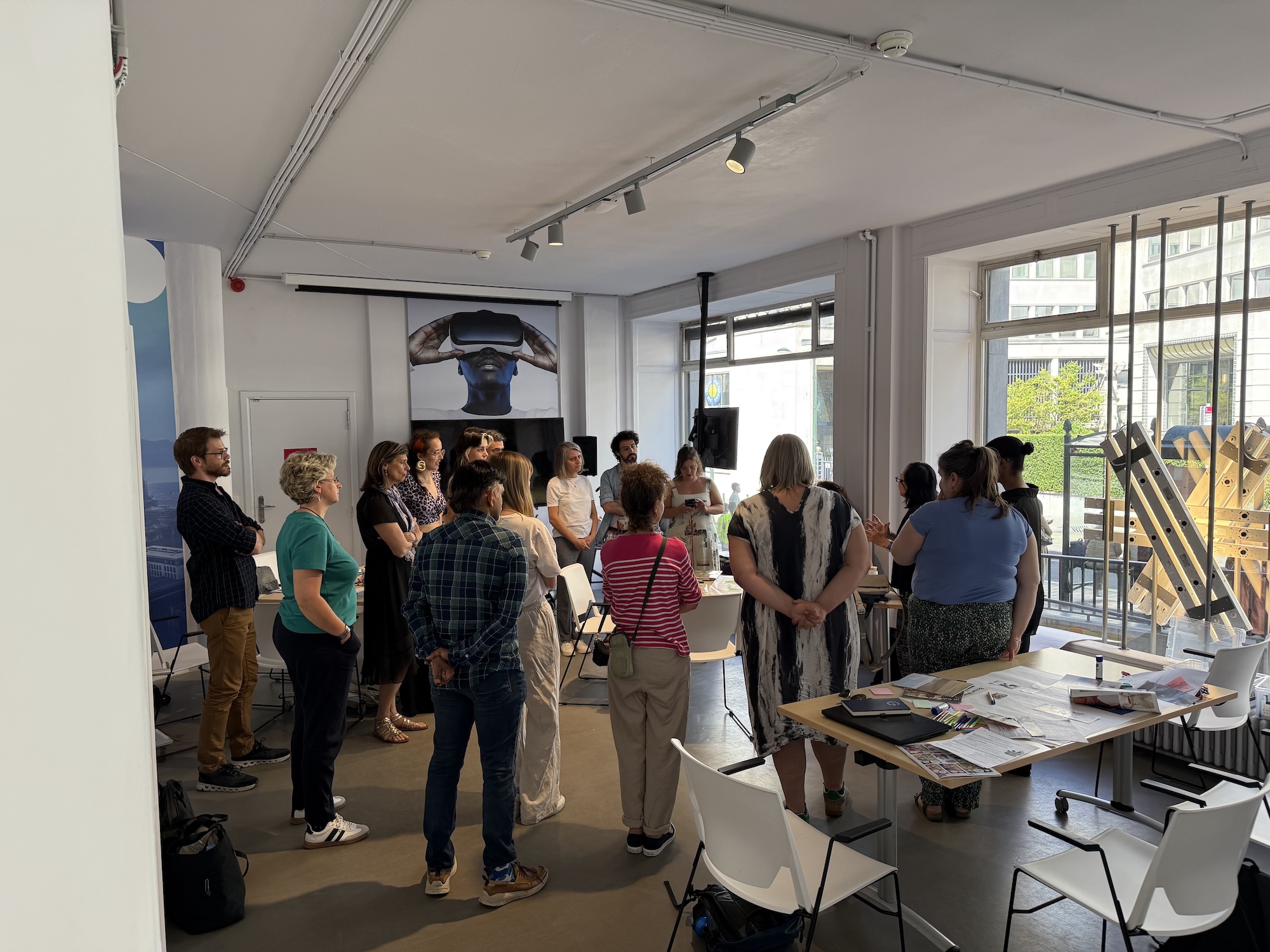
L.R: I had the opportunity to attend the workshop, which was structured around three stages. The experience was so enriching that I would love for our readers to get a sense of it. Could you take us back to the first exercise, entitled “What AI Sees, What You Are”, and explain its purpose and how participants engaged with it?
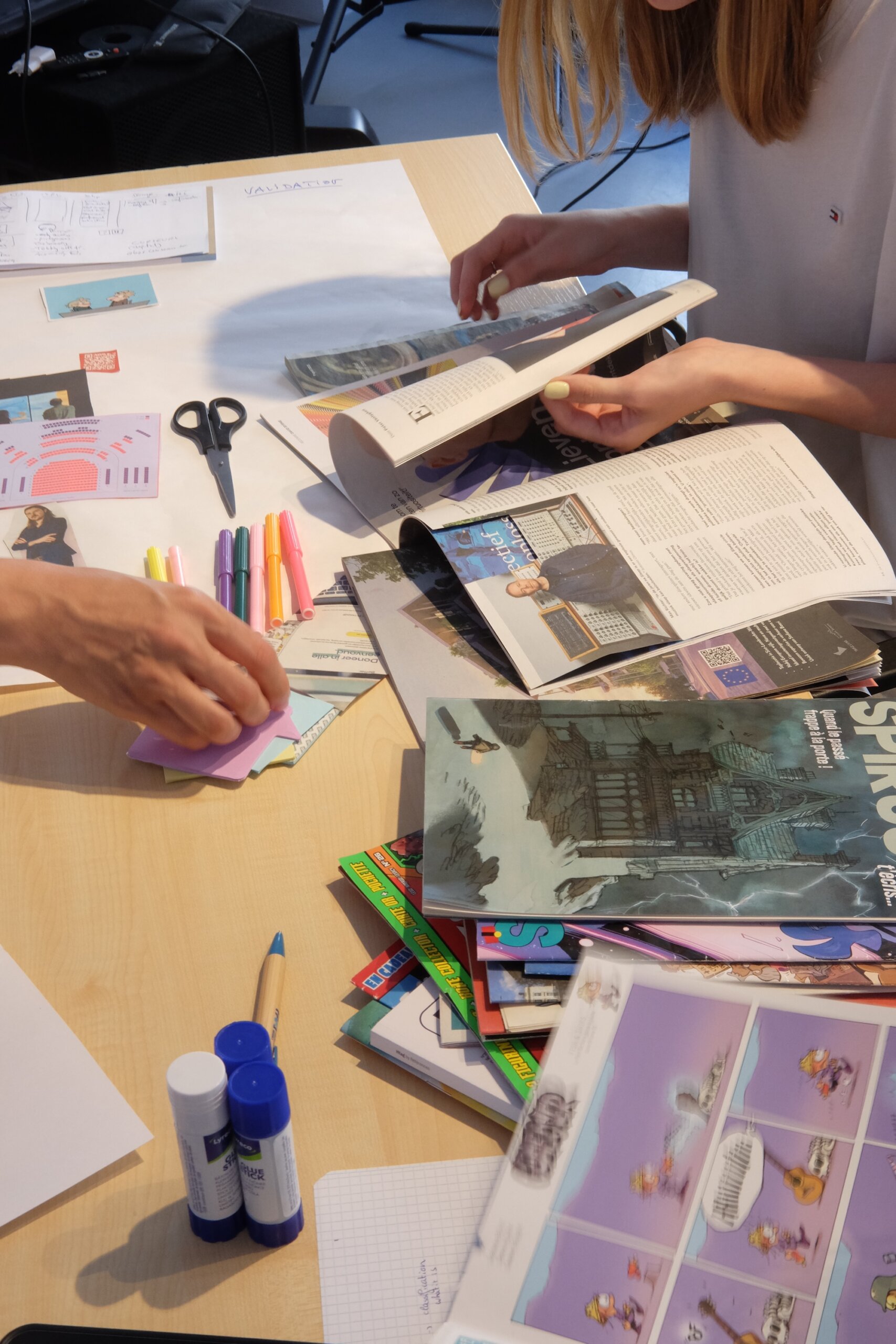
The first activity was designed to make abstract concepts tangible. We gave each participant a printed fictional case, a person whose identity was being misread or simplified by an AI system. For example ,one case was about a single mother whose workplace promotion algorithm penalized her for working flexible hours. Another was about a multilingual person classified as “Other” by a government discrimination system because none of the available language options matched their background.
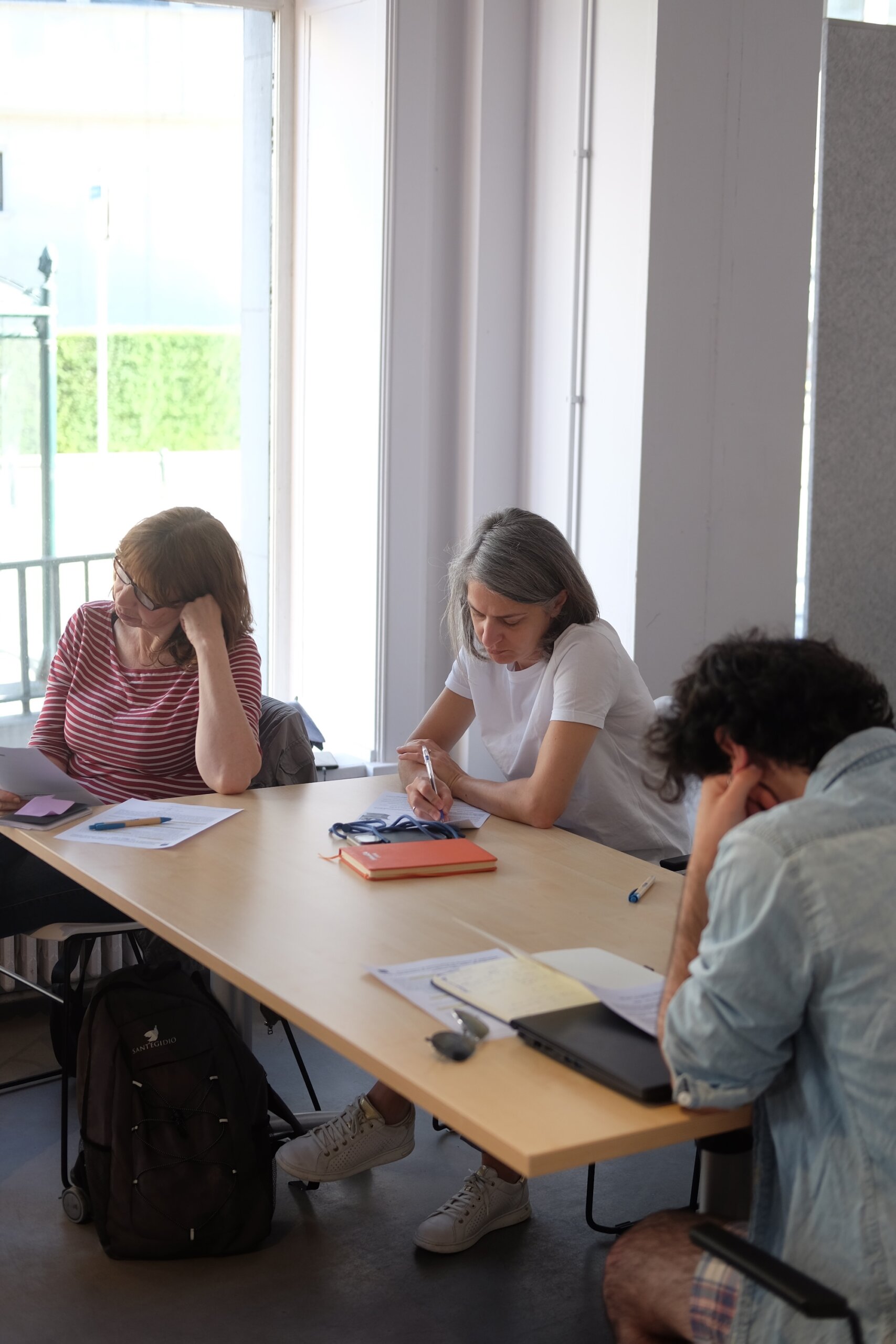
Participants were asked to reflect on the gap between how the system represented that person and who that person actually was, and to express that gap visually on a sheet, through words, drawings, symbols, whatever felt right.
What I appreciated the most was how quickly people connected with the cases. Even without any technical background, they immediately identified what was wrong and why. Several participants went beyond the fictional scenario and started drawing on their own professional experience, describing communities they work with who face exactly these kinds of misrepresentations. The activity created a space where lived experience and critical thinking came together very naturally.
L.R: In a second stage, participants were invited to imagine an AI system in which identity would be treated as fluid, contextual, and complex. At first glance, these concepts seem rather complex for a non-specialist audience. Yet the groups took on the task without any apparent difficulty. How did you experience their responses from your perspective? Were you surprised by any of the proposals? What do you think were the most striking aspects of the participants’ contributions?
I was genuinely surprised by how quickly and concretely the groups engaged with the task. These are not simple concepts, and yet within minutes every group had identified a real system, a real person, and a real alternative. One group redesigned a job matching system to delay the disclosure of personal data until after a skills match had been established. Another focused on governance and accountability, arguing that compliance alone is not enough and that real human oversight requires traceability and responsibility at every level. A third group took the TalentScore case and proposed concrete changes to how performance reviews work, including peer input and space for workers to express their own needs. And a fourth group imagined an onboarding system for someone whose language and literacy are unknown, built entirely around the principle that the person is never bound to anything and always in control. What these proposals shared was a focus on agency. In every case, the alternative system they imagined gave the person more control over how they were seen and represented.
L.R: This workshop was originally developed for the ACM CHI research community in Barcelona. Looking back on both experiences, what similarities and differences did you observe in the ways researchers and citizens engaged with and responded to the exercises we have just discussed?
I want to be careful about drawing direct comparisons between two very different contexts and audiences. That said, there are some observations that feel worth sharing. Both groups connected with the topic immediately, which in itself was telling. I think that this showed us how the tension between rigid categorization and lived identity is something people recognize from their own experience, whether they are researchers or community practitioners.
The main difference I observed was in the mode of engagement. In Barcelona, the researchers used the activities almost as a space for collective reflection and relief. The design exercise in particular became quite poetic and abstract, with participants exploring metaphors and philosophical framings for identity complexity. I had the feeling that for many of them it was a relief, finally a space to say things that are hard to fit into a standard academic paper. In Brussels, we also deliberately adapted the activities to be more concrete, providing specific fictional cases and domain examples to help participants engage without technical background. As a result, participants were much more action-oriented, thinking immediately in terms of real systems, specific communities, and practical alternatives.
In any case, both approaches were valuable and complementary. What they shared was a genuine desire to imagine something different.
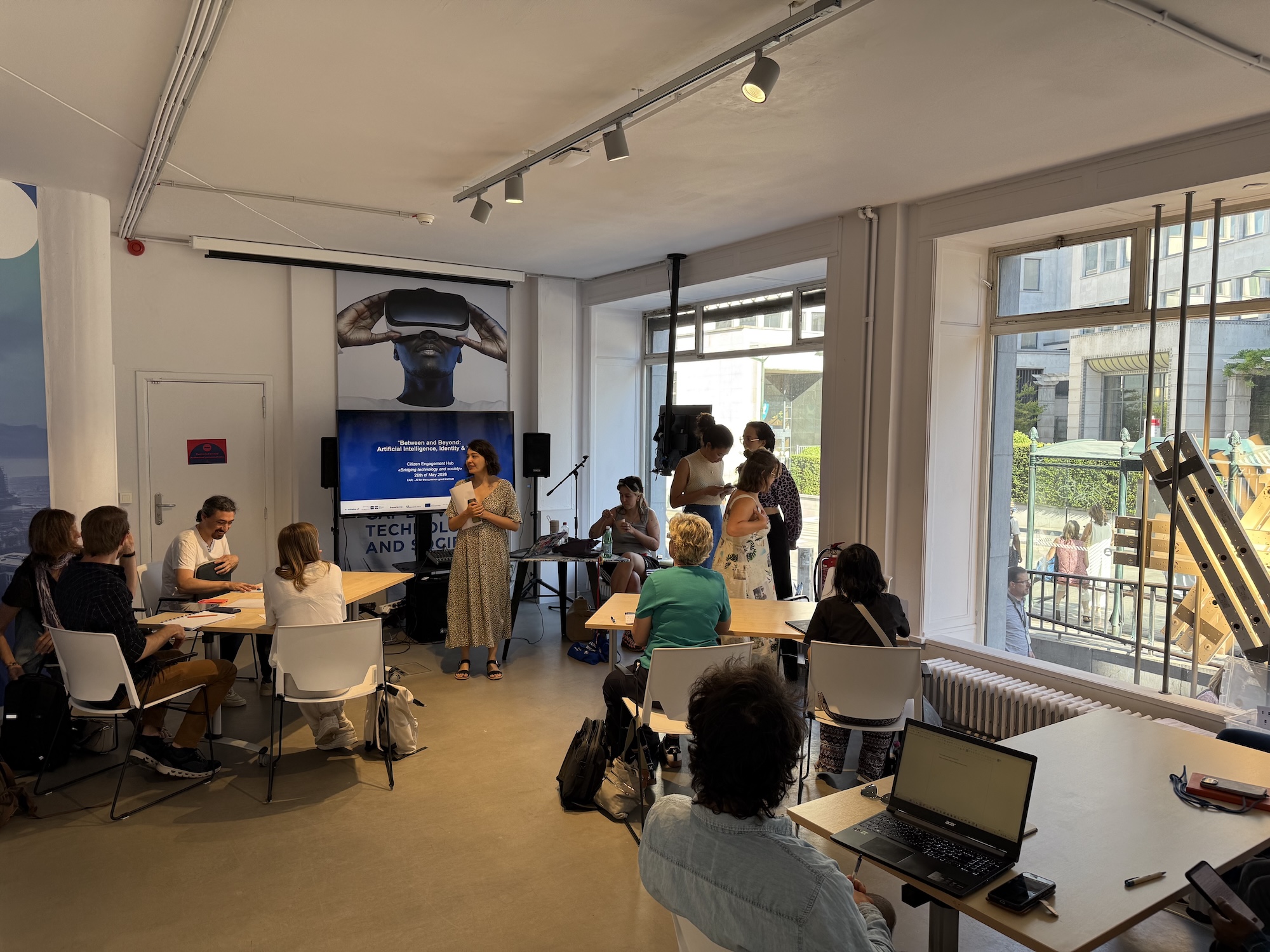
L.R: The final part of the workshop was devoted to the drafting of a collective charter. After Barcelona, around twenty citizens and community practitioners contributed in Brussels to the drafting of the charter. Why was it important for you to involve people beyond academia in this discussion?
Citizen and community involvement is already a recognized value in HCI. This project built on that foundation. The Brussels workshop was a deliberate choice to bring this conversation with practitioners who work daily with communities affected by these systems. For me, it was a reminder that the questions we work on in research have a life beyond the lab, and that participation at every stage, even at the level of brainstorming, matters.
L.R: Was this workshop with citizens a first for your research group? Looking back on the experience, could you describe in three words what it brought to you and your team?
Energizing, unexpected, necessary!
For our research group as a whole, yes, this was a first. That said, colleagues like Olivia Lopez Calderon and Dr. Monique Munarini regularly work with citizens and communities, and their experience was invaluable in shaping how we designed and facilitated the session.
L.R: During the workshop, you mentioned that the insights gathered through these consultations in Brussels and Barcelona would find their way into a forthcoming publication. Could you tell us more about it?
The outputs from both workshops will be translated into a special issue of Skin Mutts Magazine, an independent Brussels-based publication dedicated to hybrid and mixed identities. The issue will include visual artifacts, stories, and reflections produced during the workshops, as well as the two collective manifestos. It will be distributed digitally, free of charge and open access, reaching audiences well beyond academia.
L.R: We look forward to the publication and will be sure to share it with our readers. To conclude, I would like to pass the baton to the participants and researchers who will take part in future Anchoring Sessions. Based on your experience, what advice would you give to those seeking to build meaningful citizen participation into their research or projects?
My main advice would be to invest time in knowledge sharing before asking people to contribute. Citizen participation works best when participants have enough context to engage meaningfully, not as experts, but as informed people. In our case, we spent the first part of the workshop explaining how AI systems work in concrete, accessible terms, and that made everything that followed much richer. The second thing I would say is to be as practical as possible in how you design the activities. Abstract questions produce abstract answers. If you give people a concrete case, a real scenario, a specific system to react to, they will surprise you with how much they have to say.
Enjoyed this article and would like to discover the previous interview? Learn more about Anastasia Karagianni’s work.
Are you a researcher from a lab affiliated to FARI ? You would like to organise a workshop to augment the social readiness level of your project, please reach them here (citizen@fari.brussels).
Share
Other news